
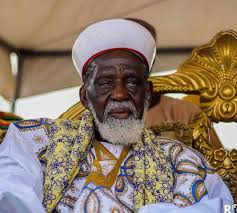

The National Chief Imam, Sheikh Osman Nuhu Sharubutu, has urged Ghanaians to make interfaith harmony a practical part of everyday life instead of limiting it to speeches and symbolic gestures during religious celebrations.
His message comes as Muslims across Ghana and around the world prepare to celebrate Eid al Adha, one of the most significant festivals on the Islamic calendar. The respected Islamic leader said the true meaning of the celebration goes beyond ritual sacrifice and should inspire moral transformation, peace, and unity within society
In a statement released ahead of the celebration, the Chief Imam stressed that Eid al Adha represents sacrifice, obedience, compassion, and spiritual renewal. According to him, these values become meaningful only when they lead to positive behavioural change and stronger relationships among people of different faiths and backgrounds.
Sheikh Sharubutu referenced Quran Chapter 22 Verse 37, explaining that Allah values sincerity, righteousness, and devotion more than the physical act of sacrificing animals during Eid festivities. He therefore encouraged Muslims and the broader Ghanaian society to focus on moral discipline, humility, and peaceful coexistence.
“The virtues of the Eid are fruitless unless they have the capacity to guarantee attitudinal cleansing and moral ascendancy in our society,” the Chief Imam stated.
The National Chief Imam also highlighted the deep historical and spiritual connections between Islam, Christianity, and Judaism. He noted that Eid al Adha is rooted in the shared story of Prophet Abraham and his son Ishmael, a narrative respected across the Abrahamic faiths.
Because of this common foundation, he urged religious communities in Ghana to continue strengthening mutual respect, tolerance, and cooperation.
According to him, interfaith harmony remains one of Ghana’s greatest national strengths and should be protected at all times, especially during periods of political tension, economic hardship, or global uncertainty.
The Chief Imam further appealed to Ghanaians to reject hatred, extremism, division, and intolerance in all forms.
Beyond Ghana, Sheikh Sharubutu also expressed concern over rising violence and instability in different parts of the world. He called on global leaders to prioritize reconciliation, peace, justice, and forgiveness instead of aggression and hostility.
He warned that humanity risks losing its moral values when societies allow hatred and supremacy battles to override compassion and shared humanity.
The message aligns with broader global conversations around religious tolerance and peaceful coexistence. International organizations including the United Nations have repeatedly promoted interfaith dialogue as an important tool for peacebuilding and social stability across diverse societies.
Ghana has often been praised internationally for its peaceful coexistence between Muslims, Christians, and traditional religious groups. Religious celebrations in the country are frequently supported across faith lines, with many communities participating in each other’s festivals and social activities.
Political leaders have also echoed similar messages in recent days. President John Dramani Mahama, during the national Eid al Adha celebrations in Accra, urged citizens to reject division, political intolerance, and extremism while protecting Ghana’s peaceful reputation.
Observers say the Chief Imam’s latest remarks carry significant weight because of his longstanding influence in promoting national unity and peaceful coexistence in Ghana.
At a time when religious tensions continue to affect several parts of the world, many believe Ghana’s example of interfaith cooperation remains an important model for stability in Africa and beyond.
The Eid al Adha celebrations are expected to bring together thousands of Muslims across the country for prayers, charity activities, and community gatherings as leaders continue to emphasize peace, sacrifice, and compassion.