
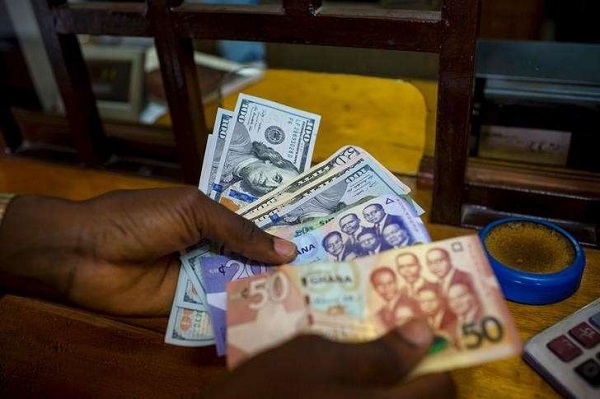

Ghana’s economic recovery story is showing mixed signals after new data from the Bank of Ghana revealed that the Ghana cedi has depreciated by 8.4 percent against the US dollar in 2026, even as inflation dropped sharply to 3.4 percent.
What’s the new cedis value to one US dolla
The latest Summary of Economic and Financial Data released by the central bank indicates that the local currency weakened steadily in the first months of the year. By the first week of May 2026, the cedi was trading at GH¢11.4125 to one US dollar, compared to GH¢10.95 recorded at the end of January.
The depreciation comes at a time when Ghana’s inflation rate has continued to decline significantly. Analysts say the sharp drop in inflation reflects tighter fiscal discipline, improved monetary policy measures, and relative stability in domestic prices over recent months.
However, economists believe inflation alone is not enough to fully protect the cedi from external market pressures.
According to the data, the cedi also lost 7.5 percent against the British pound and the euro during the same period. The development highlights continued pressure on Ghana’s foreign exchange market despite broader macroeconomic improvements.
Factors contributing to the cedi’s weakness
One major factor contributing to the cedi’s weakness is the rise in global crude oil prices. Brent crude reportedly surged by more than 67 percent year to date, reaching over $103 per barrel in April. Higher oil prices often increase Ghana’s fuel import costs, placing additional demand on foreign currency reserves.
At the same time, cocoa prices have declined sharply on the international market. Cocoa remains one of Ghana’s biggest export commodities, and lower prices reduce foreign exchange inflows into the economy. Bank of Ghana data showed cocoa prices dropping by more than 43 percent year to date as global supply conditions improved.
Despite the recent depreciation, Ghana’s economy has recorded stronger macroeconomic indicators compared to previous years. Reports from the World Bank and other financial institutions indicate that inflation has remained on a downward trend while economic growth has improved steadily.
The central bank had earlier projected potential downside risks for the cedi in 2026, especially if global commodity prices weakened or geopolitical tensions eased. Those risks appear to be materializing gradually as the foreign exchange market experiences renewed pressure.
Financial analysts say investor confidence remains relatively stable, but demand for dollars from importers and companies operating in Ghana’s energy sector continues to put pressure on the local currency. Reuters recently reported that forex demand and supply constraints are among the key reasons behind the cedi’s current performance.
For businesses and consumers, the weakening cedi could eventually affect the cost of imported goods and services if the trend persists. Imported fuel, machinery, electronics, and food products are likely to face pricing pressure if exchange rate instability continues over the coming months.
Still, some economists argue that Ghana’s lower inflation environment provides a stronger foundation for economic stability than what the country experienced in previous years. The challenge now lies in sustaining foreign exchange inflows and maintaining investor confidence amid changing global market conditions.
The coming months are expected to test the resilience of Ghana’s economy as policymakers attempt to balance inflation control, exchange rate stability, and economic growth simultaneously.