

The government is preparing to introduce a major reform bill aimed at restructuring the Ghana Cocoa Board as part of broader efforts to stabilize Ghana’s struggling cocoa sector and improve financial sustainability.
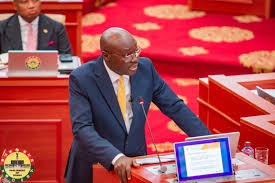
Finance Minister Dr. Cassiel Ato Forson announced that the proposed legislation will focus on modernizing the operations of the Ghana Cocoa Board, widely known as COCOBOD, while addressing long standing financial and structural challenges affecting the institution.
According to the Finance Minister, the reform agenda forms part of government efforts to restore confidence in Ghana’s cocoa industry after years of declining production, rising debt pressures, and concerns about inefficiencies within the sector.
Speaking at a stakeholder engagement, Dr. Forson explained that the planned reforms are expected to improve transparency, strengthen accountability, and reposition COCOBOD to better support cocoa farmers and the national economy.
The announcement comes at a time when Ghana’s cocoa sector faces mounting economic pressure.
In recent years, cocoa production has declined significantly due to multiple factors including illegal mining, climate related challenges, smuggling, disease outbreaks, aging farms, and high production costs. Ghana, once firmly established as the world’s second largest cocoa producer, has experienced lower output levels that have affected export earnings and farmer incomes.
COCOBOD itself has also faced growing debt burdens linked to syndicated loans, operational financing, and cocoa purchasing commitments.
Government officials say the reform bill will seek to improve financial discipline within the institution while ensuring more efficient management of resources and farmer support programs.
The Finance Minister noted that reforms are necessary to protect the long term future of Ghana’s cocoa industry, which remains one of the country’s most important export sectors and a major source of rural employment.
Although details of the legislation have not yet been fully disclosed, officials say the reforms are expected to focus heavily on farmer welfare and productivity improvement.
Industry analysts believe the bill could include measures aimed at improving farm rehabilitation, boosting local cocoa processing, enhancing price stabilization systems, and reducing bureaucratic inefficiencies within COCOBOD.
There are also expectations that government may review aspects of cocoa financing, input distribution, and extension services under the proposed restructuring framework.
Cocoa farmers across Ghana have repeatedly raised concerns about delayed payments, rising fertilizer costs, limited access to farm inputs, and challenges caused by illegal mining activities destroying cocoa farms.
Some farmer associations have therefore welcomed discussions around reforms but insist implementation will be more important than policy announcements.


The cocoa industry continues to play a central role in Ghana’s economy despite recent challenges.
Millions of Ghanaians depend directly or indirectly on cocoa production, transportation, processing, and export activities. Cocoa exports also remain a major contributor to foreign exchange earnings and government revenue.
However, economic experts have repeatedly warned that declining productivity and financial instability within the sector could have wider implications for Ghana’s economy if reforms are delayed.
The government’s proposed bill is therefore being viewed as one of the most important agricultural policy interventions expected this year.
Observers say successful reform of COCOBOD could help restore investor confidence, improve farmer incomes, and strengthen Ghana’s position within the global cocoa market.
Calls for restructuring COCOBOD have intensified in recent years amid debates over debt management, operational costs, and the institution’s future role in the cocoa value chain.
Some economists and agricultural policy experts have argued that COCOBOD requires deeper institutional reforms to become more commercially efficient and less dependent on heavy borrowing.
Others believe stronger anti smuggling measures, increased local processing capacity, and better environmental protection policies will also be necessary to revive cocoa production sustainably.
Government officials insist the upcoming bill represents a serious attempt to address these long standing concerns while protecting farmers and national economic interests.
The proposed legislation is expected to be presented to Parliament in the coming months as consultations continue with stakeholders across the cocoa industry.
For many observers, the success of the reforms could shape the future direction of one of Ghana’s most important economic sectors for years to come.