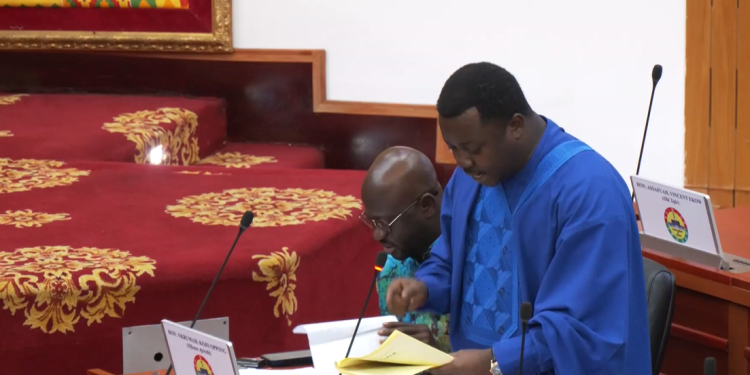

Fresh divisions have emerged in Parliament after the Minority strongly opposed proposed amendments to the Human Sexual Rights and Family Values Bill, popularly known as the anti LGBTQ bill.
The disagreement surfaced during parliamentary deliberations on Clause 9 of the bill, where lawmakers debated whether certain professional groups should be exempt from sanctions under the proposed legislation.
The proposed amendments seek to protect lawyers, journalists, medical practitioners, counsellors, psychologists, and other professionals from being prosecuted when carrying out legitimate duties involving individuals identified as LGBTQ persons. Supporters of the amendments argue that professional services and routine work should not be interpreted as promoting LGBTQ activities.
However, members of the Minority, including Assin South MP Rev. John Ntim Fordjour and Bosome Freho MP Nana Asafo Adjei Ayeh, have rejected the proposed changes, insisting they weaken the original intent of the bill.
Minority Says Amendments Water Down the Bill
According to the Minority lawmakers, the exemptions create loopholes that could allow indirect support or promotion of LGBTQ activities under the cover of professional work.
Rev. Ntim Fordjour, one of the bill’s key sponsors, argued that the original legislation presented in the previous Parliament did not include such protections.
He maintained that exempting lawyers, medical professionals, journalists, academic researchers, and non governmental organizations would significantly alter the purpose of the legislation.
The Minority further argued that introducing the exemptions suggests the earlier version of the bill submitted for presidential assent under former President Nana Akufo Addo was somehow inadequate.
“This is a watered down version,” some opponents of the amendments argued during the debate.
The lawmakers warned that they would resist attempts to include the proposed exemptions and insisted that Parliament should preserve what they describe as the original spirit of the legislation.
Majority Defends Proposed Exemptions
On the other side of the debate, Majority Leader Mahama Ayariga defended the amendments, saying they are intended to clarify the law and reduce the risk of constitutional challenges.
According to him, concerns had been raised by media organizations, legal practitioners, and professional groups who feared the bill could criminalize legitimate work and infringe on constitutional rights.
“The Media raised strong issues because they think that we are violating the right to free expression. Professionals such as lawyers raised strong issues that we are violating their professional freedom, and violating the rights of people to legal services. So what the committee is trying to do is to narrowly set out those exceptions where, when you speak, you will not be considered as promoting or supporting LGBT.” he said.
Ayariga explained that the committee’s objective was to narrowly define exceptions so that professionals carrying out lawful duties would not be accused of promoting LGBTQ activities.
He argued that courts would likely reject attempts to prosecute lawyers for representing clients or journalists for reporting on public issues.
“The bill is not being diluted,” he insisted, stressing that its core objective remains unchanged.
According to the Majority Leader, the legislation still seeks to prohibit LGBTQ practices and advocacy while protecting constitutional freedoms connected to professional services and public information.
Parliament Continues Debate on Controversial Legislation
The Human Sexual Rights and Family Values Bill remains one of the most controversial pieces of legislation in Ghana’s recent history.
The proposed law seeks to impose criminal penalties for same sex relationships and activities considered to promote or support LGBTQ practices. Previous versions of the bill also attracted significant debate from religious groups, human rights organizations, legal experts, and international partners.
Supporters argue the legislation protects Ghanaian cultural values, family structures, and religious beliefs. Critics, however, say parts of the bill could conflict with constitutional rights and international human rights obligations.
The disagreement over Clause 9 highlights the growing tension between lawmakers seeking stricter enforcement measures and those advocating legal safeguards for professional and constitutional protections.
Pressure Mounts as Bill Moves Forward
The debate comes as Parliament continues consideration of the bill following renewed efforts to pass the legislation in 2026.
The Human Sexual Rights and Family Values Bill was recently approved by Parliament after extensive discussions, reviving legislation that had previously stalled despite receiving parliamentary support in 2024.
Political observers believe disagreements over exemptions and enforcement provisions could remain a major issue even as supporters push for final approval and presidential assent.
With public interest in the bill remaining high, lawmakers are expected to continue intense debates over how to balance cultural values, legal protections, media freedoms, and professional responsibilities within the proposed legislation.
For now, the Minority’s rejection of the amendments has added another layer of controversy to one of Ghana’s most closely watched legislative battles.