
Policy think tank, the Integrated Social Development Centre (ISODEC), has raised concerns over Ghana’s decision to transition into a new International Monetary Fund Policy Coordination Instrument arrangement, warning that the country risks surrendering control over key economic decisions to external institutions.
The criticism comes just days after government announced Ghana’s successful exit from the IMF’s $3 billion Extended Credit Facility bailout programme and confirmed plans to move into a non financing Policy Coordination Instrument, commonly known as a PCI.
According to ISODEC, while the PCI may help maintain fiscal discipline and reassure investors, it could also deepen Ghana’s dependence on external policy direction instead of strengthening domestic economic independence.
ISODEC Questions IMF Dependence
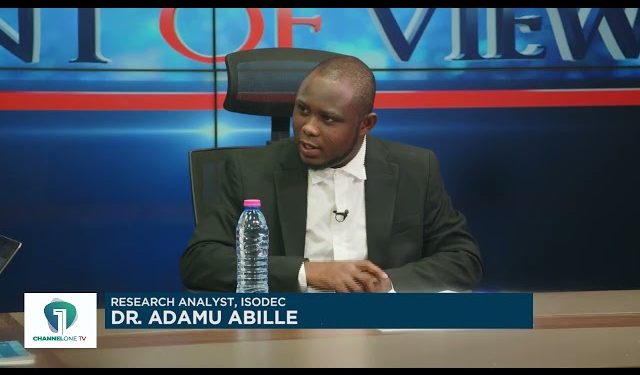
Speaking on Citi TV’s The Point of View on Monday, May 18, ISODEC economist Dr. Adamu Abile argued that Ghana’s recent economic improvements were not solely the result of IMF intervention. He insisted that local policy measures such as gold reserve accumulation, stronger foreign exchange management, and domestic revenue efforts played a major role in stabilizing the economy.
“It is not necessarily the IMF programme that brought us here,” Dr. Abile reportedly stated while questioning the growing reliance on IMF backed policy frameworks.
The economist warned that Ghana’s repeated return to IMF linked programmes reflects deeper structural weaknesses within the national economy and could undermine long term economic sovereignty.
According to ISODEC, Ghana must focus on building stronger internal systems capable of supporting economic stability without relying heavily on international financial institutions.
“When you talk about giving us policy credibility so that we have market confidence to go back and borrow, ISODEC has a serious objection to that,” he stressed.
Debate Over Economic Sovereignty
The PCI arrangement differs from a traditional IMF bailout because it does not involve direct financial support. Instead, it provides technical guidance, policy monitoring, and reform oversight intended to help countries maintain macroeconomic stability after exiting financial rescue programmes.
Government officials argue that the new arrangement will strengthen investor confidence, improve fiscal discipline, and prevent future economic slippages.
A statement from the Presidency described the PCI as a strategic step toward achieving long term fiscal sustainability and eventually regaining investment grade economic status. Officials say the arrangement could also lower borrowing costs and attract long term investors into Ghana’s economy.
However, ISODEC strongly disagrees with the idea that policy credibility should be tied primarily to external approval from institutions such as the IMF.
Dr. Abile criticized suggestions that Ghana needs IMF monitoring to regain market confidence, arguing that the country should instead prioritize domestic economic planning and resource based development strategies.
Calls for Resource Nationalism
ISODEC also called for a more resource nationalist approach to economic management, particularly in sectors such as mining, gold production, and natural resource development.
According to the think tank, Ghana should focus on maximizing local ownership and control over strategic industries rather than relying excessively on foreign influenced economic models.
The organization believes that stronger domestic industrialization, value addition, and local investment policies could provide a more sustainable path toward economic independence.
This argument continues to resonate among some economists and policy analysts who believe African countries often remain vulnerable to external pressure because of debt dependence and weak local production systems.
IMF Defends New Reform Framework
Meanwhile, the IMF maintains that the PCI is designed to help Ghana preserve gains achieved under the previous bailout programme while strengthening reforms in areas including public financial management, debt sustainability, financial sector stability, and economic diversification.
According to the IMF, Ghana’s economy has shown significant improvement in recent months, including lower inflation, improved foreign reserves, stronger cedi performance, and better investor confidence.
The Fund also noted that future reforms under the PCI will focus on transparency, governance, fiscal discipline, and strengthening state owned enterprises.
Public Debate Expected to Continue
The debate surrounding Ghana’s transition into the PCI arrangement is expected to continue as economists, political groups, and civil society organizations assess the long term implications of the new agreement.
Supporters argue that continued IMF engagement could help Ghana avoid another economic crisis while maintaining investor confidence and policy stability.
Critics, however, believe excessive reliance on external policy supervision could limit Ghana’s ability to independently design economic strategies tailored to local development priorities.
As Ghana moves beyond its latest IMF bailout programme, questions surrounding fiscal discipline, debt management, economic sovereignty, and sustainable growth are likely to remain central to national economic discussions in the coming years.