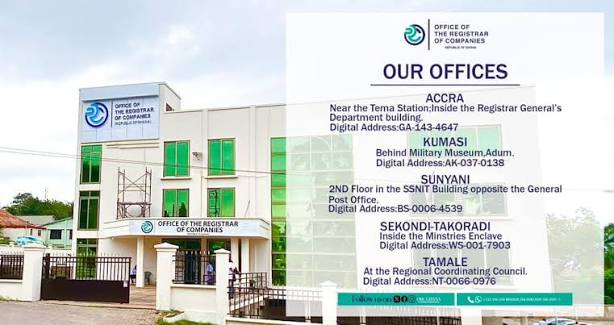

Starting a business in Ghana involves choosing the right legal structure. This decision affects your taxes, liability, and growth potential. The Office of Registrar of Companies oversees all business registrations in the country.
READ ALSO: How To Register Your Business in Ghana
Below is a detailed look at the main types or forms of business registration in Ghana, including their advantages, disadvantages, and real-life examples.
Types of Business Registration in Ghana
Sole Proprietorship
A sole proprietorship is owned and controlled by one individual. It is the most common structure for small businesses.
Example: A local food vendor or a small fashion designer shop operating under a personal name or business name.
Advantages:
Easy and inexpensive to register
Full control of the business
Fewer legal requirements
Disadvantages:
Unlimited personal liability
Limited access to funding
Business may end if the owner stops operating
This is ideal for individuals starting small-scale ventures.
Partnership
A partnership is formed when two or more people come together to run a business.
Example: Bentsi-Enchill, Letsa & Ankomah, a well-known law firm in Ghana.
Advantages:
Shared responsibilities and capital
Combined expertise
Easier to raise funds than a sole proprietorship
Disadvantages:
Shared liability among partners
Potential conflicts
Profit sharing reduces individual earnings
Partnerships are common in professional services such as law and accounting.
Private Limited Company (Ltd)
A private limited company is a separate legal entity from its owners. It is widely used by growing businesses.
Example: Kasapreko Company Limited, a leading beverage manufacturer in Ghana.
Advantages:
Limited liability for owners
Separate legal identity
Easier to attract investors
High credibility
Disadvantages:
More complex registration process
Regulatory and compliance obligations
Higher operational costs
This structure is suitable for businesses aiming for expansion.
Public Limited Company (PLC)
A public limited company can sell shares to the public and may be listed on the Ghana Stock Exchange.
Example: MTN Ghana, one of the largest telecom companies in the country.
Advantages:
Ability to raise large capital
Increased public trust
Business continuity
Disadvantages:
Strict regulations
High cost of operation
Reduced control by founders
This type is ideal for large corporations.
Company Limited by Guarantee
This structure is mainly for non-profit organizations that do not distribute profits to members.
Example: Ghana Red Cross Society.
Advantages:
No share capital required
Limited liability
Suitable for NGOs and charities
Disadvantages:
Cannot share profits
Relies on donations or grants
Limited funding flexibility
It is best suited for social impact organizations.
External Company (Branch of a Foreign Company)
An external company is a foreign business registered to operate in Ghana.
Example: Standard Chartered Bank Ghana, originally part of an international banking group.
Advantages:
Access to Ghanaian market
Strong global brand backing
Established operational systems
Disadvantages:
Must comply with local laws
Limited independence
Complex tax obligations
This structure is ideal for international businesses expanding into Ghana.
Conclusion On Types of Business Registration In Ghana
Choosing the right business structure in Ghana is a critical step for success. Each option comes with unique benefits and risks. Small businesses may prefer sole proprietorships, while larger ventures often choose private or public companies for growth and investment opportunities.
Understanding these options will help you make informed decisions and build a sustainable business.