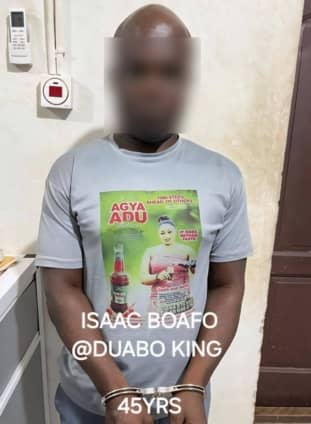

A 45-year-old social media content creator known as Duabo King has been arrested by the Ashanti Regional Police Command for allegedly spreading false information about police officers.
More Details on Duabo King Arrest
Police identified the suspect as Isaac Boafo, a Ghanaian citizen who produced and shared a video alleging misconduct by four officers attached to the Central Police Station in Kumasi. In the viral clip, Isaac Boafo, also known as Duabo King claimed the officers had engaged in inappropriate conduct with commercial sex workers while on duty during night patrols in the Asafo area. These serious assertions rapidly circulated among online users.
However, investigations by the Ashanti Regional Police Command revealed that the allegations were entirely unsubstantiated. When apprehended by officers from the Police Intelligence Directorate, Boafo admitted that he had no evidence to support the claims and that he created the video solely to attract views and engagement on social media. He also reportedly conceded to making additional unverified statements concerning the President of Ghana, again solely for content creation.
Duabo King Charges and Legal Implications
Duabo King has been formally charged with publication of false news with intent to cause fear and panic, a serious offence under Ghanaian law. He remains in police custody as investigations continue. Authorities have stated that they are examining the full extent of his online activities and the potential impacts of his false allegations.
In a public statement, the Ashanti Regional Police Command issued a strong warning to the broader community about the dangers of publishing and sharing unverified information on digital platforms.
The statement emphasised that misinformation can create unnecessary fear, cause reputational harm, and disrupt public trust in institutions. Individuals who publish or circulate such content risk prosecution and legal consequences.
Misinformation and Social Media Responsibility
The arrest of Duabo King comes amid nationwide debates about misinformation and the responsibilities of content creators on social media.
Platforms like TikTok have become powerful tools for communication and expression, but they also pose challenges when used to spread unfounded allegations.
Experts and civil society advocates in Ghana have previously highlighted the need for clearer guidelines on digital speech, particularly in balancing freedom of expression with accountability for falsehoods.
On the other hand, critics of misinformation laws in Ghana argue that overly broad legal provisions can be misused to suppress dissent or criticism.
However, police officials maintain that deliberately fabricated content designed to mislead the public and damage reputations falls outside legitimate use of online platforms. In this case, law enforcement emphasised that the content lacked verifiable evidence and had the potential to mislead citizens about the conduct of public officials.
Reaction From Ghanaians on Duabo King Arrest
The case has drawn attention from digital rights advocates who stress the importance of responsible online engagement. Ghanaians note that misinformation can exacerbate mistrust in public institutions and undermine social cohesion.
Many Ghanaians are therefore urging educational campaigns and clearer frameworks for digital literacy to help the public distinguish between credible information and fabricated claims.
As Ghana’s social media landscape continues to evolve, authorities and civil society groups alike are closely watching how legal frameworks and public education efforts adapt to these new challenges. The Duabo King case serves as a high-profile reminder that online content creators must exercise care and integrity in what they publish.